
Guides
What a mold remediation business hire must learn in the first weeks for a small operation
Mold remediation employee training checklist in five staged gates, from respirator prerequisites through yard work to the judgment calls a lead must make.
What to take away
- Training is a sequence with gates, not a folder of certificates. Nothing in stage two happens until stage one is signed.
- Every item needs a demonstration, a date and the name of whoever watched it.
- The prerequisites for respirator work come before any site work at all, and they cannot be compressed.
- Refreshers matter most for the things that rarely happen: the stop call, the escalation, the incident.
General training checklist for planning. Not safety, medical or legal advice. Your obligations depend on your state and your operations, so confirm them with the relevant agency.
Stage one: before any site work
- Company orientation: who to call, for what, and when.
- The written safety and health program explained, not handed over. The OSHA guidance on safety and health programs describes what that program should contain and how a small employer runs it.
- Hazard communication for every product carried on the van.
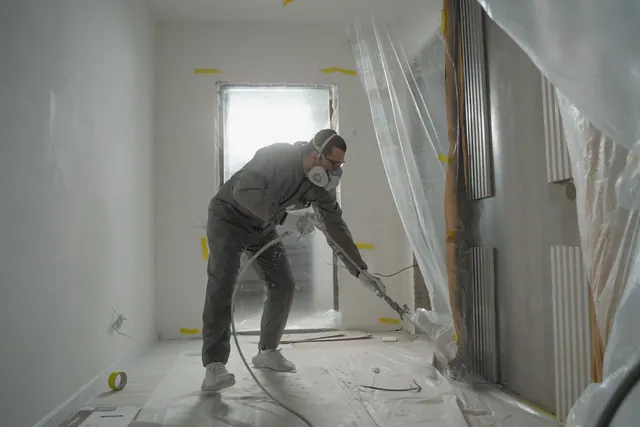
- Respirator program: medical evaluation completed, fit test completed and recorded, training on donning, doffing, seal checks, cleaning and storage.
- Heat illness awareness, with the firm's actual hot weather plan.
- Manual handling and ladder use.
- Incident and near miss reporting: what counts, who to tell, how fast.
- Pay, hours and timekeeping explained, consistent with the Department of Labor guidance for new and small businesses.
- Conduct in occupied homes, including privacy, photographs and what not to discuss with occupants.
Sign each item, dated, with the name of the person who delivered it. No exceptions, including for experienced hires.
Stage two: yard competence
- Equipment identification: what each unit is for and what it will not do.
- Cleaning, filter changes and logging a unit back in.
- Loading a van against a written list.
- Meter handling, battery checks and the reference check routine from your equipment and setup standard.
- Consumable restocking and the trigger levels.
- Waste handling and the disposal route your area actually requires.
Stage three: supervised site work
- Site arrival: what to check before anything is unloaded.
- Protection of routes, floors and contents.
- Containment construction, and what a good seal looks like.
- Air handling setup, including where exhaust goes and where make-up air comes from.
- Electrical load awareness, and what to do when a breaker cannot take the plan.
- Taking readings at named locations, and recording them so they can be repeated.
- The photographic protocol, in order, every visit.
- Explaining the work to an occupant in plain language.
Stage four: the judgment items
These are what separate a technician from a lead, and they are the ones that get skipped.
- The stop rule: the exact triggers, the action, and who has authority to restart.
- Recognizing that a building's age raises an asbestos or lead question before demolition starts.
- Recognizing an unrepaired water source and saying so.
- Handling a health question from an occupant. The EPA guidance on mold cleanup in a home tells people with health concerns to consult a health professional, and that is the answer to give: sympathetic, and out of your lane.
- Handling a complaint on site without conceding or arguing.
- Deciding that porous material has to go, and explaining why.
Test these with scenarios, out loud, not with a form. Ask what they would do and listen for the phone call.
Stage five: role specific
Lead technician. Job file ownership, closeout pack assembly, customer walkthrough, coordinating the verification, and the change order conversation.
Estimator. Scope writing, quantity take-off, the risk line, and what may not be claimed in a quote.
Coordinator. Scheduling around equipment rather than around people, equipment tracking, and the contact rhythm with customers.
Refreshers, and when
- Respirator fit test and training on the schedule your program requires.
- Stop rule and escalation, at least annually, by scenario.
- Hazard communication whenever a product changes.
- Standards refresher whenever a standard is revised, for everyone it affects.
- Anything that appears twice in a quarter of your mold remediation quality assurance checklist audits, immediately.
The record
One sheet per person lists every item, the date, the assessor, and the next due date. Keep it as long as the employment record itself. It must be ready without hunting when an insurer, client, or inspector asks.
Treat your obligations under the EEOC material for small businesses as part of the same discipline. Training offered to some people and not others, with no documented reason, is a problem beyond the training gap.
Fit this into the staged progression in mold remediation hiring and training, and start it during the first thirty days described in how to hire reliable staff, when a new person is still expecting to be taught things.
Common questions
How long does the full sequence take?
The prerequisites take as long as appointments take, which is usually the constraint. Yard competence comes quickly. Site competence takes weeks of supervised work, and judgment takes a season.
Can experienced hires skip stages?
They can move faster, and they should not skip. Their previous employer's standards are not yours, and the sign-off is what tells you which habits arrived with them.
Who should deliver the training?
Whoever actually does the work well, with the owner delivering the stop rule personally. That last one matters: a technician needs to hear from the person who signs the invoices that stopping is expected.
What if someone fails an item?
Repeat it and record both attempts. A training record that shows only successes tells nobody anything, including you.