Guides
The bookkeeping routine that keeps a mold remediation business solvent
Insurance-funded mold work pays slowly, so the books must track each job's material cost, who actually pays, and the exact week cash runs lowest.
What to take away
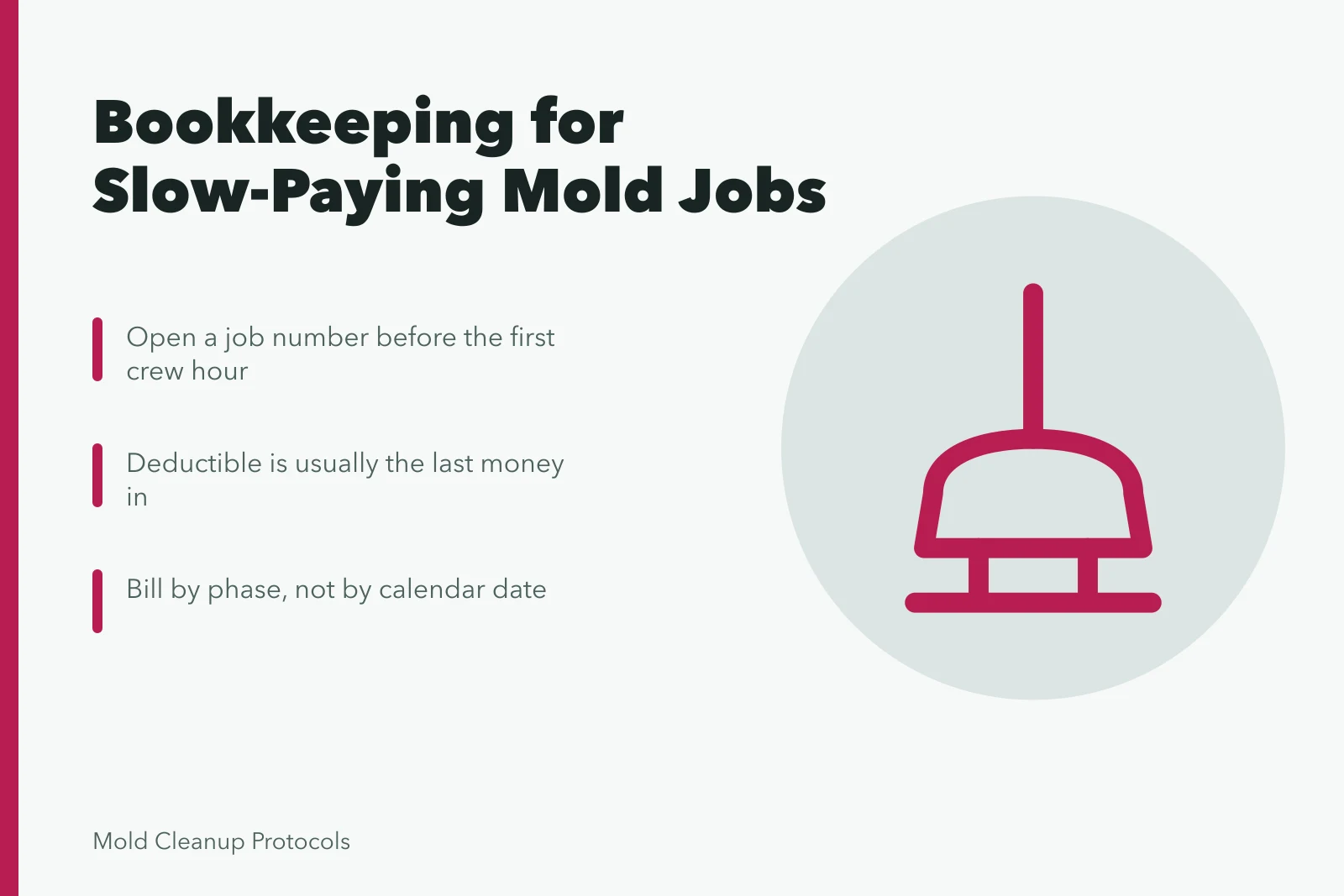
- Open a job number before the first crew hour, because a cost with no job number becomes overhead and every job then looks more profitable than it was.
- On insurance-funded work the payer is often three parties: the carrier, the mortgage holder named on the loss check, and the homeowner who owes the deductible.
- The deductible is usually the last money in. Budget it as the final receipt, not the first.
- Bill by phase, not by date, so a carrier can verify progress without a site visit.
- Reconcile every closed job against its estimate for the first several months, then sample.
General guidance on financial routines. Not tax, accounting or legal advice. Have your setup reviewed by an accountant who works with restoration contractors.
Build the accounts around the job
Your chart of accounts should answer one question fast: what did this job cost. Separate direct costs from overhead and tag every direct cost to a job number.
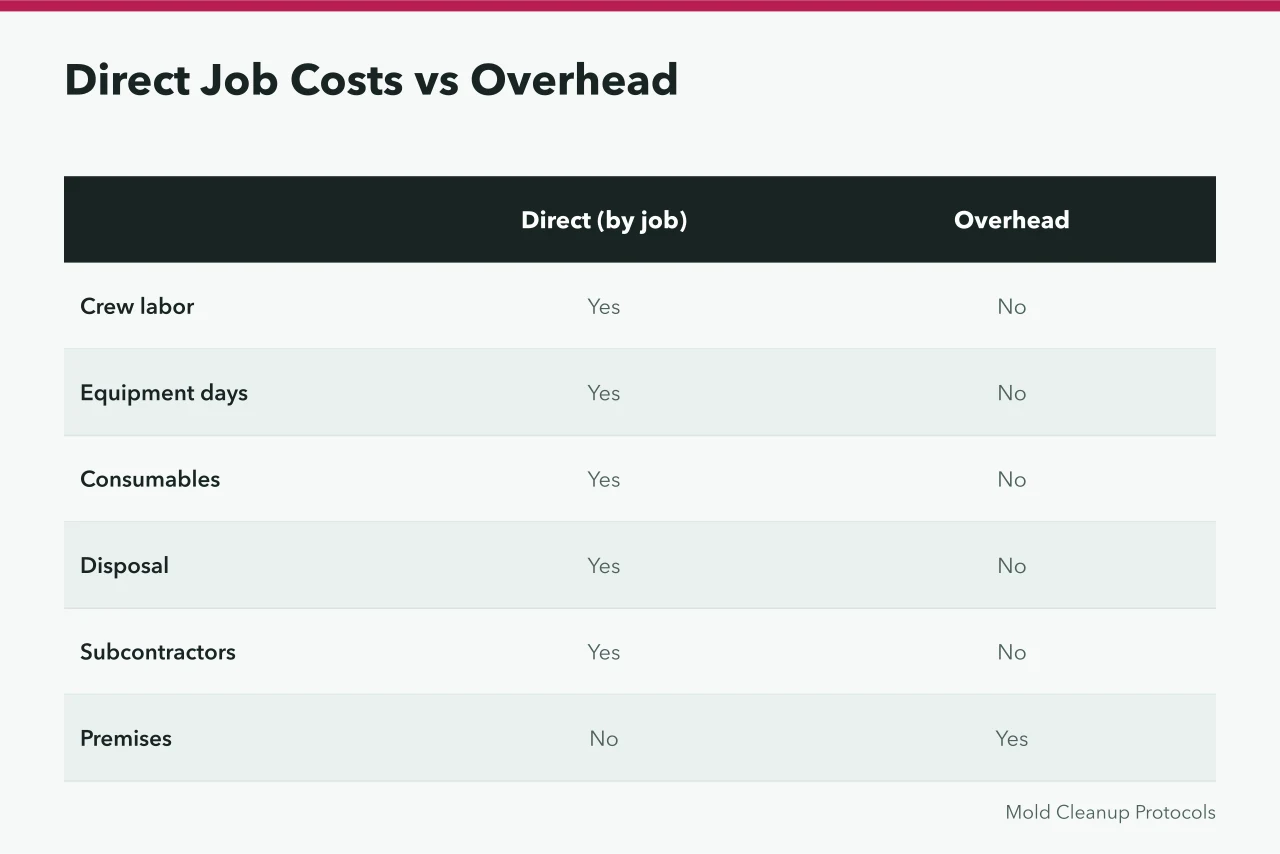
Direct, by job: crew labor including employer costs, equipment days at your own calculated day cost, consumables issued, and disposal. Subcontractors are also direct.
Overhead includes several items:
- premises
- insurance
- software
- vehicles not tied to a crew
- admin time
- your own drawings
Keep equipment purchases, equipment repairs and equipment rental in three separate accounts. Mixing them hides the only number that tells you whether to own or rent, which is worked through in equipment and setup.
The records to keep, and why
The IRS guidance on records a business should keep allows any system that clearly shows income and expenses, and expects documents for purchases, sales, payroll and assets.
For a remediation firm the job file and the accounting file are one record. A signed scope and any change order explain the invoice. The invoice explains the deposit. Attach the job number to receipts, timesheets, rental invoices and disposal tickets alike.
Where insurance-funded cash goes wrong
Payroll runs weekly. Insurance-funded payment does not. That gap is the whole problem, and it has four named causes.
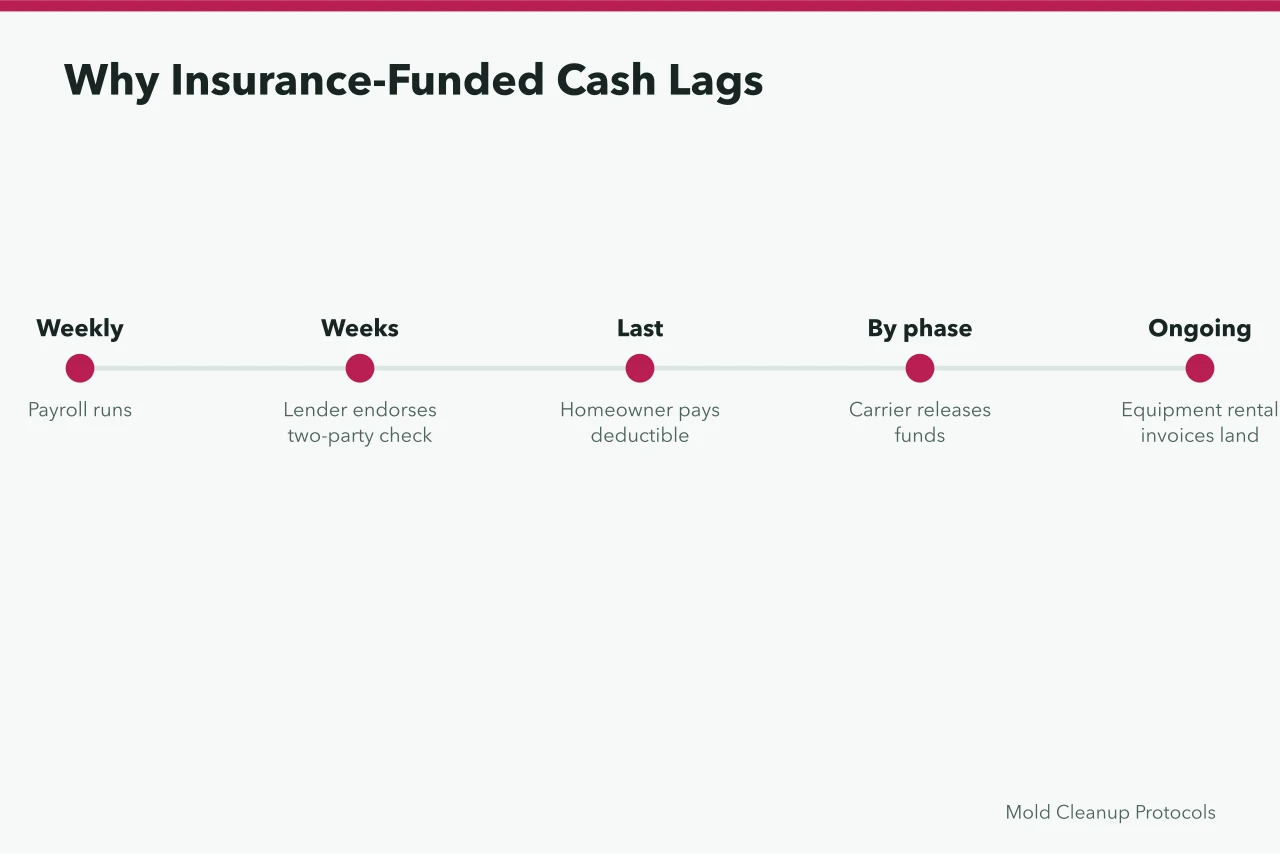
A mortgage holder named on the loss check. When the carrier issues a two-party check, the lender must endorse it. That adds weeks you cannot compress, only plan around.
The deductible. It is the homeowner's money, and homeowners pay it last, often after the work is finished and the carrier has paid its share.
Staged carrier releases. Many adjusters release funds by phase, so a completed tear-out pays before the drying is done. Your costs do not stage themselves that way.
Rental and finance payments. Equipment invoices land while the job is still open and the receivable is still unpaid.
None of these are unusual. All of them are survivable if they are modeled rather than discovered.
The levers that work
- Take a deposit where it is lawful and customary, and raise it at quotation rather than at signature.
- Stage payments against phases, not calendar dates, because phases are observable by both parties.
- Name the payer in writing before mobilization, especially where an occupant, an owner and a carrier are all involved.
- Invoice the day the job closes out, not at month end.
- Chase on a schedule. The first call goes out before the due date, not after it.
- Keep a line of credit for the receivables gap, and do not spend it on equipment.
Model cash monthly, separately from profit
Build a thirteen-week view and keep it current. Include opening cash, expected receipts by payer type, weekly payroll, and equipment rental. Also include finance payments and tax set aside rather than borrowed against. Finish with closing cash.
Use your own days-to-payment history per payer type, not the terms printed on the invoice. Carriers, lenders and homeowners pay on three different clocks.
The number to manage is the lowest point in the period. A firm that knows its trough six weeks out has options. A firm that finds it on the day has none. Test those assumptions against the break-even work in mold remediation profit margins and break-even points.
Reconcile jobs, then price from the result
Job costing pays off only if you read it. Reconcile every job against its estimate for the first several months, then a sample after that. The pattern that emerges, a job type you consistently underestimate or a room size that always takes an extra day, is what should change your pricing and profit assumptions.
The reporting side belongs with the tooling described in mold remediation software and KPI. The market assumptions behind the model sit in mold remediation startup and market.
Protect the financial records
Your accounting system holds bank details, customer information and payroll data. The CISA resources for small and medium businesses and the NIST small business cybersecurity quick start guides cover practical controls.
- multi-factor authentication on financial accounts
- removing access when someone leaves
- backups you have restored once to prove they work
Add one habit specific to contractors. Verify any change of bank details by phone, on a number you already had, before paying anything. Invoice redirection fraud targets this trade because payments are large, irregular and expected.
Common questions
Do I need an accountant from day one?
For the setup, yes. Getting the chart of accounts and the job costing structure right at the start costs an hour and saves a year of untangling. After that, a quarterly review is usually enough.
Should I use cash or accrual accounting?
Ask your accountant, because it depends on your size, structure and revenue. What matters operationally either way is that you watch cash on its own schedule, separate from the profit line.
How do I handle a job that spans two months?
Recognize costs and revenue consistently, and make sure your job costing does not spread one job's costs across periods in a way that hides its contribution. Your accountant sets the method; you apply it the same way every time.
What is the earliest warning of a cash problem?
Days to payment lengthening for one payer type. It shows up weeks before the bank balance does, which is exactly why it is worth measuring monthly.