Guides
How to Write Xactimate Estimates for Mold Remediation Jobs
Xactimate mold remediation estimates: turn field notes into carrier-ready claims. Learn line items, checks, and handoff conditions that get paid.
What to take away
- An Xactimate estimate for mold work is a claim document, not a bid; it must match the insurer's scope language and the technician's daily logs.
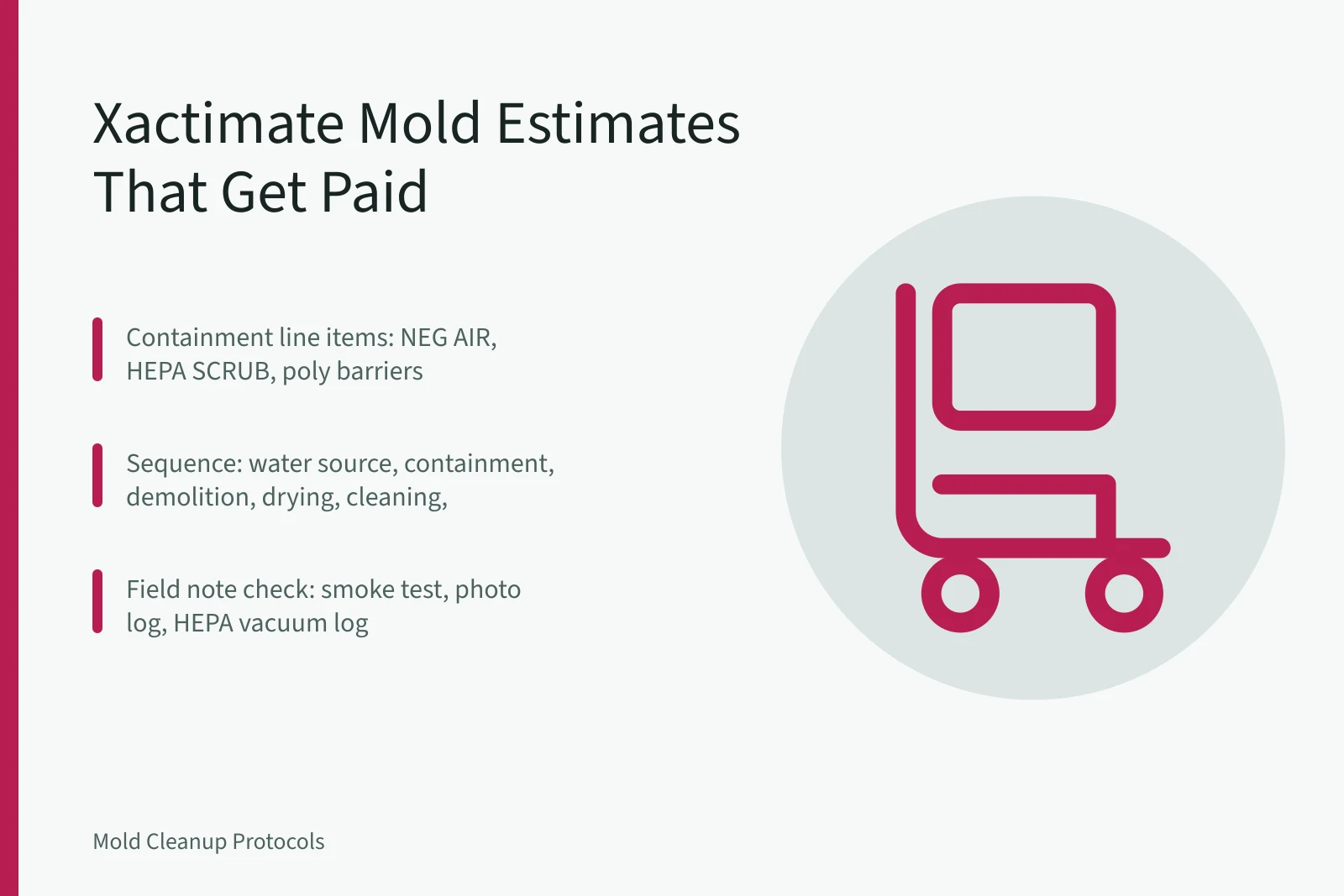
- The sequence starts with the water source, then containment, then demolition, then drying, then cleaning, then clearance.
- The deciding step is the scope line item for containment: if negative air and full containment are omitted, every later line item is at risk.
- Check each line item with a visible or measurable field note before submitting; adjusters reject unsupported line items.
- When a claim includes sewage, exterior floodwater, or over 100 square feet of affected material, hand the estimate to a licensed estimator.
Before the first line item
Before you open Xactimate, the job file has to contain three things. You need a moisture map with readings, a photo log that shows containment and demolition, and a technician's daily field notes that tie each activity to a date. Without these, an adjuster will not pay for work that happened. The EPA course introduction for mold remediation describes the assessment and cleanup stages that an estimate should mirror. Use the adjuster's claim number and the carrier's line item naming convention at the top of the estimate.
The sequence that gets a mold estimate approved
- Start a new claim estimate in Xactimate and select the loss type as water damage with mold remediation notes.
- Add emergency water extraction and structural drying line items only if the moisture map shows wet materials.
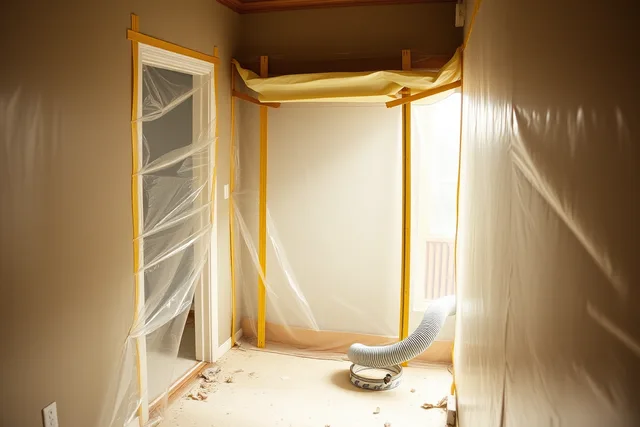
- Add full containment with negative air pressure, HEPA air scrubber, and poly barriers for any mold area larger than 10 square feet.
- Add demolition line items for wet drywall and baseboard using the exact room names from the photo log.
- Add antimicrobial cleaning, HEPA vacuuming, and post-remediation wipe-down as separate scope items.
- Add clearance air sampling only if the carrier or an environmental consultant requested it in writing.
- Review the estimate with the technician to confirm each line item has a matching field note.
- Submit through the carrier's preferred method and note the claim number on every page.
The sequence fails when a line item is inserted from a template without a field note. A technician who knows the work follows the mold remediation business hire checklist, so the line items match field conditions. Each step has a check. The moisture map must show a falling trend after extraction. The containment barrier must pass a smoke test. The demolition photos must show the same rooms named in the line item.
The step that decides the result
Containment is the step that decides whether the rest of the line items survive. In Xactimate, full containment line items such as NEG AIR, HEPA SCRUB, and poly barrier are not optional for mold work above a small isolated patch. If the adjuster sees containment missing, they often deny the related line items in the same review. State the containment setup in the estimate notes: number of air scrubbers, barrier placement, and whether the area stayed under negative pressure. The ASTM E3024 standard practice for mold remediation includes clearance air sampling; use it only after containment is verified.
Checking each line item came out right
Use a field note check for each category before submitting.
| Line item category | Visible or measurable check | Common reason for rejection |
|---|---|---|
| Containment | Smoke test holds under negative air | Missing air scrubber count |
| Demolition | Photo shows wet drywall cut at a measured line | Room name mismatch |
| Cleaning | HEPA vacuum log and wipe-down photo | No daily monitoring note |
| Clearance | Air sample lab report compares indoor to outdoor spore types | Sampling without written request |
- Moisture map has date and time for each room.
- Containment photo shows poly overlap and negative air gauge.
- Demolition photos show the same room names as Xactimate line items.
- Cleaning log lists HEPA vacuum and antimicrobial product used.
- Clearance air sample request is in writing from the carrier.
A clean checklist keeps the line items aligned with the field file. The same structure appears in the template behind them guide for sample quotes.
Recovery when a line item fails review
The most common failure is an adjuster rejecting a containment or drying line item for lack of a daily monitoring note. Recover by opening the estimate, locating the denied line item, and pulling the technician's field note for that date and room. Add the note text to the line item in Xactimate, attach the matching photo, and resubmit with a short comment that names the date and reading. Do not add unrelated line items to make up the difference; that triggers a closer review. The mold remediation complaint handling guide describes how to keep the exchange short and documented when an adjuster pushes back.
The professional handoff condition
Stop and hand the estimate to a licensed estimator when any of these conditions is true. The water source is sewage or outside floodwater. The affected area is over 100 square feet of contiguous mold. The carrier has assigned an independent adjuster. Writing a line item for a sewage loss without the proper category code will cause denial and possible coverage dispute. In that case, let a professional estimator or an industrial hygienist set the scope.
Common questions
Do I need a separate Xactimate license for mold work? Not always. Most restoration contractors use a standard Xactimate license and build a mold scope from water and cleaning categories. Check your carrier's guidelines for any required macro set.
What is the most common reason an adjuster rejects a mold line item? No field note or photo matching the line item. Add the date, room, and moisture reading to the estimate note before submitting.
When should clearance air sampling be included? Only when the carrier, an environmental consultant, or a third party requests it in writing. Unrequested clearance sampling often gets denied as non-covered work.
How do I know when to hand the estimate to a professional? Hand it over when the affected area is over 100 square feet, the water source is sewage or exterior floodwater, or the claim is in litigation. A licensed estimator or independent adjuster should take the file then. An estimate file with consistent documentation can also lead to more referrals from adjusters.