Guides
California Mold Remediation Waste Disposal Rules Explained
California mold remediation waste disposal: contractors must classify debris under DTSC and CUPA rules before hauling. Missing a manifest brings daily penalties.
What to take away
- Moldy debris disposal California rules start with DTSC classification, not with the landfill.
- California's DTSC and county CUPA agencies classify mold-contaminated debris more strictly than most states.
- Non-hazardous moldy drywall and carpet usually go to a permitted solid waste or construction and demolition landfill, not a hazardous waste site.
- Hazardous or universal waste on a job, such as asbestos, lead paint, or certain solvents, changes the disposal path and triggers manifest and EPA ID duties.
- A contractor who skips a required manifest can face daily civil penalties and a stop-work order.
Who has jurisdiction
California splits mold waste oversight among three layers: state statutes, county CUPA enforcement, and private landfill or building rules.
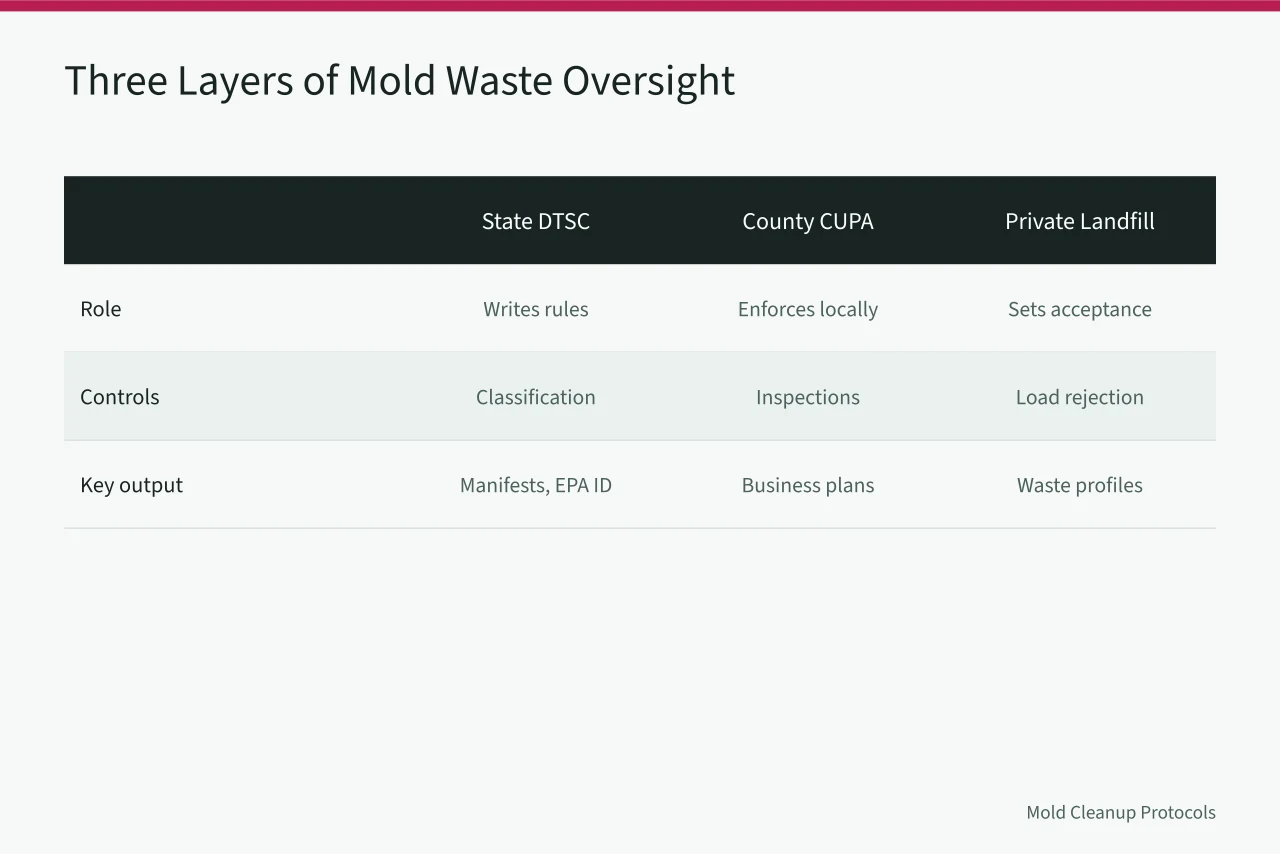
| Level | Authority | What it controls |
|---|---|---|
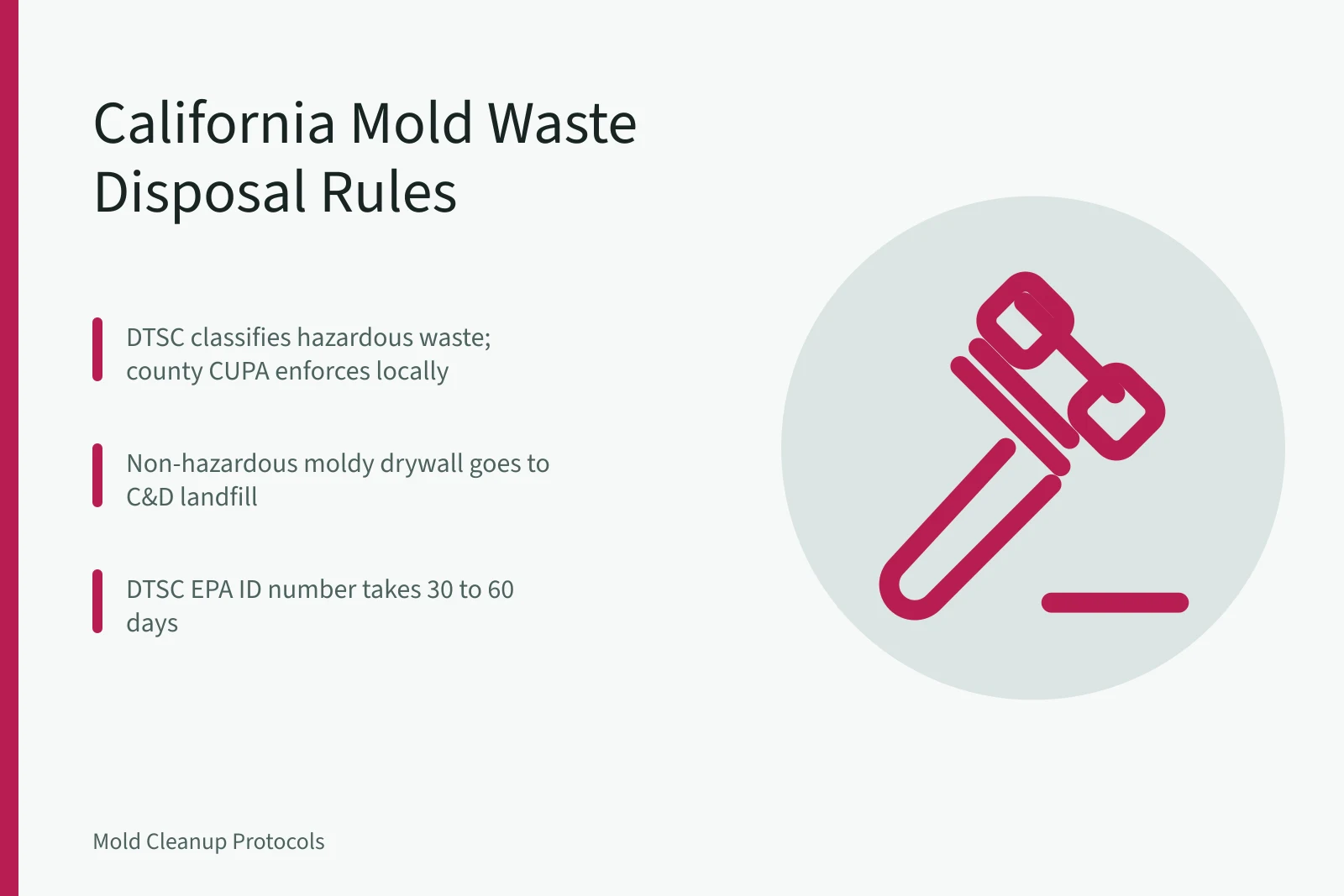
| State | DTSC under Health and Safety Code | Hazardous waste classification, manifests, EPA ID numbers |
| Municipal | County CUPA agencies | Inspections, local enforcement, business plans, some waste profiles |
| Private | Landfill operators and building owners | Acceptance terms, load rejection, site-specific waste profiles |
The California Department of Toxic Substances Control (DTSC) writes the state hazardous waste rules that matter for moldy debris. County Certified Unified Program Agencies, known as CUPAs, enforce those rules at the local level. Landfill operators impose a third layer of private acceptance rules, and a load can be turned away even if DTSC does not classify it as hazardous.
Waste classification does not end the job, and the protocol for mold clearance air sampling is a separate closeout step. California DTSC mold waste rules use the same hazardous waste categories as federal RCRA, but California adds stricter listing interpretations. The state can also require a waste profile before a hauler takes a load, while a municipal CUPA may add a local business plan review for the site.
What triggers a permit
A routine residential mold job with wet drywall, carpet, and insulation rarely needs a state waste permit. The same debris becomes regulated only when it carries something else: asbestos, lead-based paint, pesticides, solvents, or enough contaminated dust to fail a California hazardous waste characteristic test.
The EPA mold cleanup guide treats moldy porous materials as debris to be discarded, but California adds classification duties when a contaminant is present. A contractor who repeatedly generates hazardous or universal waste may need a DTSC EPA ID number. Larger generators must use hazardous waste manifests for each shipment. A one-time mold job that produces only non-hazardous solid waste does not need an EPA ID, but the hauler still must take it to a permitted landfill.
What to submit
Before a job starts, collect the documents that match the waste class.
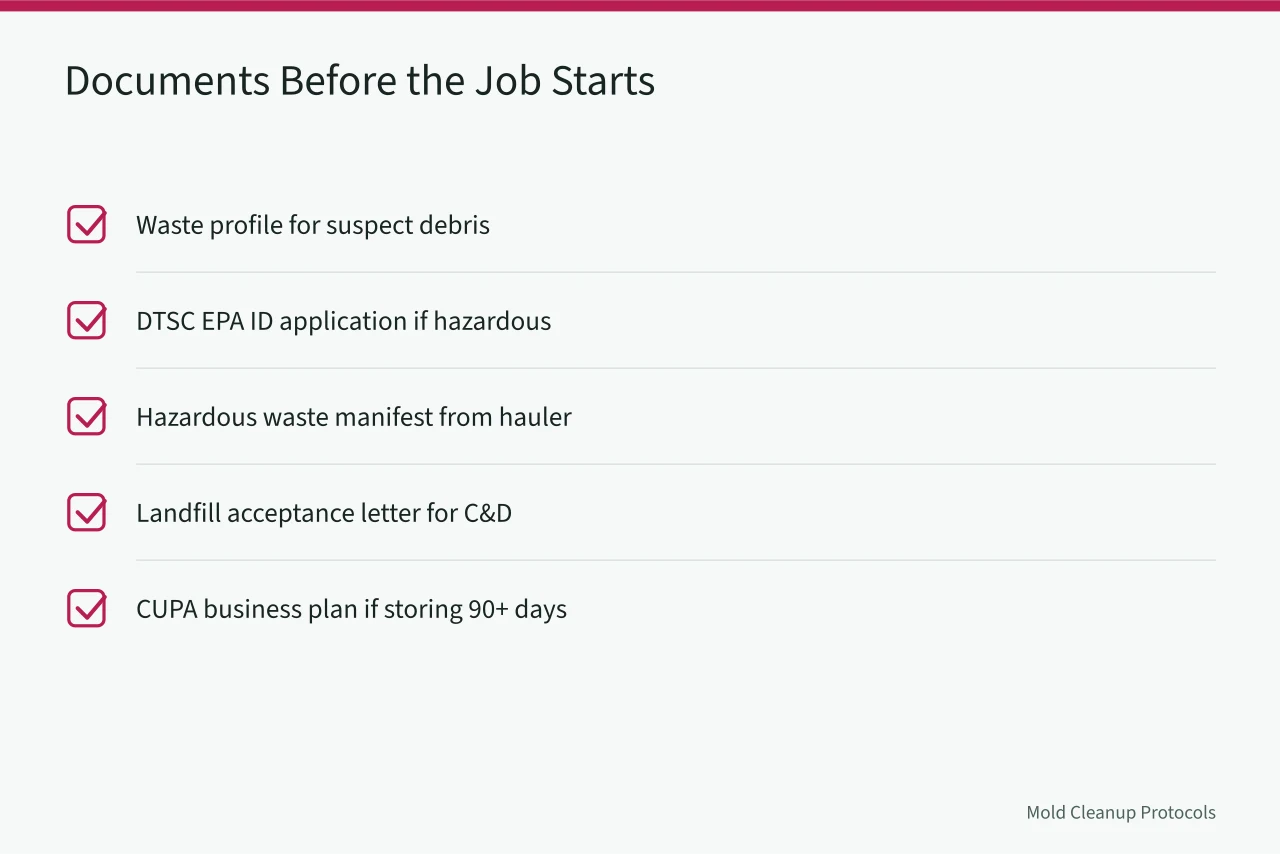
- Waste profile or characterization for any suspect debris
- DTSC EPA ID number application if the project will generate hazardous or universal waste
- Hazardous waste manifest from the registered hauler
- Landfill acceptance letter or profile for non-hazardous C&D debris
- CUPA business plan amendment if the site stores waste for more than 90 days
The DTSC EPA ID application asks for the business name, site address, waste codes, and an estimate of monthly generation. A landfill may also want a waste profile sheet with a lab analysis for asbestos or lead. If your contract assigns disposal duties to a subcontractor, the clauses in mold remediation contracts should name that party and the waste destination.
How long approval takes
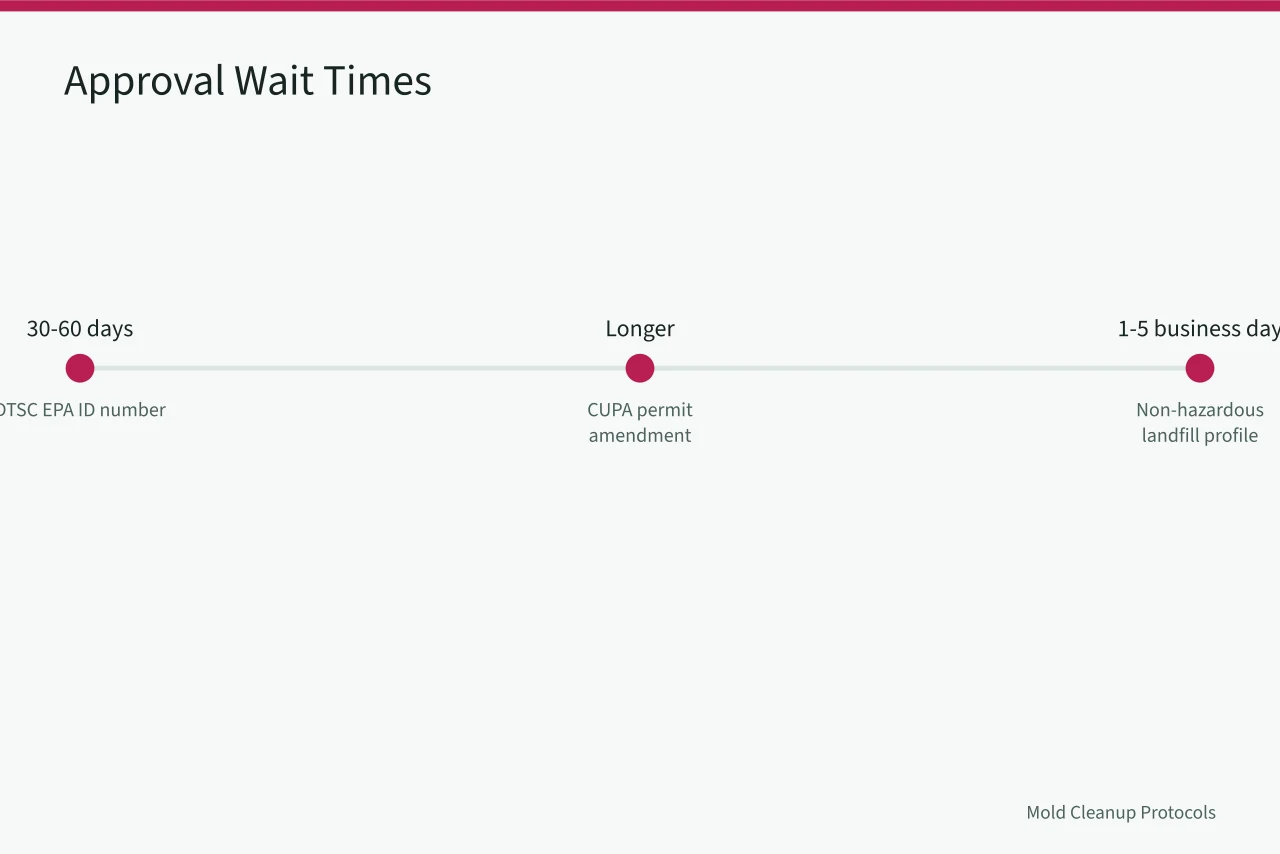
Plan for a 30 to 60 day wait on a DTSC EPA ID number for a new generator. CUPA permit amendments for hazardous waste storage can take longer because the agency may inspect the site first. Non-hazardous landfill profiles are often reviewed in one to five business days, but a rush review is not guaranteed. Match the disposal path to the project schedule so the waste does not sit on site past the allowed accumulation time.
What happens if you skip it
A contractor who hauls moldy debris without a required hazardous waste manifest can face civil penalties of up to $25,000 per day for each violation, plus cleanup costs. The authority comes from California Health and Safety Code section 25191.
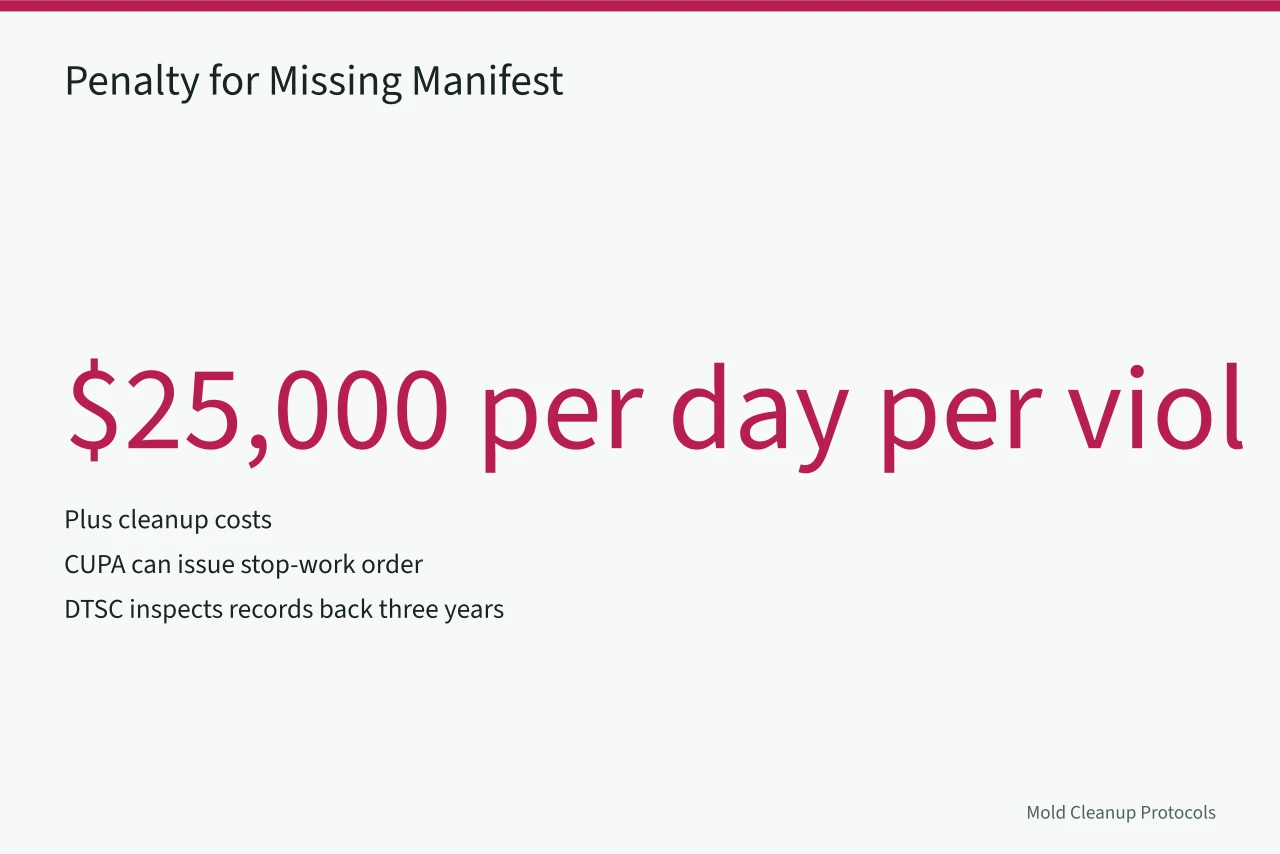
CUPA inspectors can also issue a stop-work order on the active job while they review waste records. The landfill may flag the contractor's account, and future loads from the same company can be rejected without a new waste profile. A "cradle to grave" manifest violation can follow the generator for years because the DTSC can inspect records going back three years.
Before crews handle waste containers, respirator fit testing is often required under OSHA, and that requirement sits outside the waste rules. A missing manifest does not excuse the safety duty, and a safety citation does not excuse the waste duty.
Example
A Los Angeles contractor removes moldy drywall from a 1970s apartment. The drywall tests positive for asbestos, so it is now a California hazardous waste. The contractor must stop treating it as construction and demolition debris. The contractor must obtain an EPA ID number if not already registered, use a DTSC manifest through a registered hauler, and keep the manifest for at least three years.
The same job under construction waste mold California rules would have been non-hazardous if no asbestos were present. The local CUPA inspects the job file after a neighbor complaint. Because the manifest is missing, the agency issues a notice of violation and starts a penalty case under Health and Safety Code section 25191.
In your Xactimate estimates, the waste disposal line should reflect the local landfill classification, not a flat rate for all mold jobs. A contractor who prices the job without that line may have to absorb a rejected load or a return trip.
Common questions
Does moldy drywall count as hazardous waste in California? Moldy drywall alone is usually non-hazardous solid waste. If it contains asbestos, lead, or another regulated contaminant, it must follow California hazardous waste rules.
Who issues waste permits for mold remediation contractors? DTSC issues EPA ID numbers for hazardous waste generators. County CUPA agencies enforce permits and inspect sites, but they do not issue a separate mold waste disposal license.
Can a landfill reject non-hazardous mold debris? Yes. A private landfill can require its own waste profile or advance approval, and it can reject a load even when state law would allow disposal.
What records must a contractor keep after disposal? Keep hazardous waste manifests for at least three years. For non-hazardous loads, keep weight tickets and landfill receipts long enough to answer a CUPA or client audit.